He had walked this way so long that he no longer chose it.
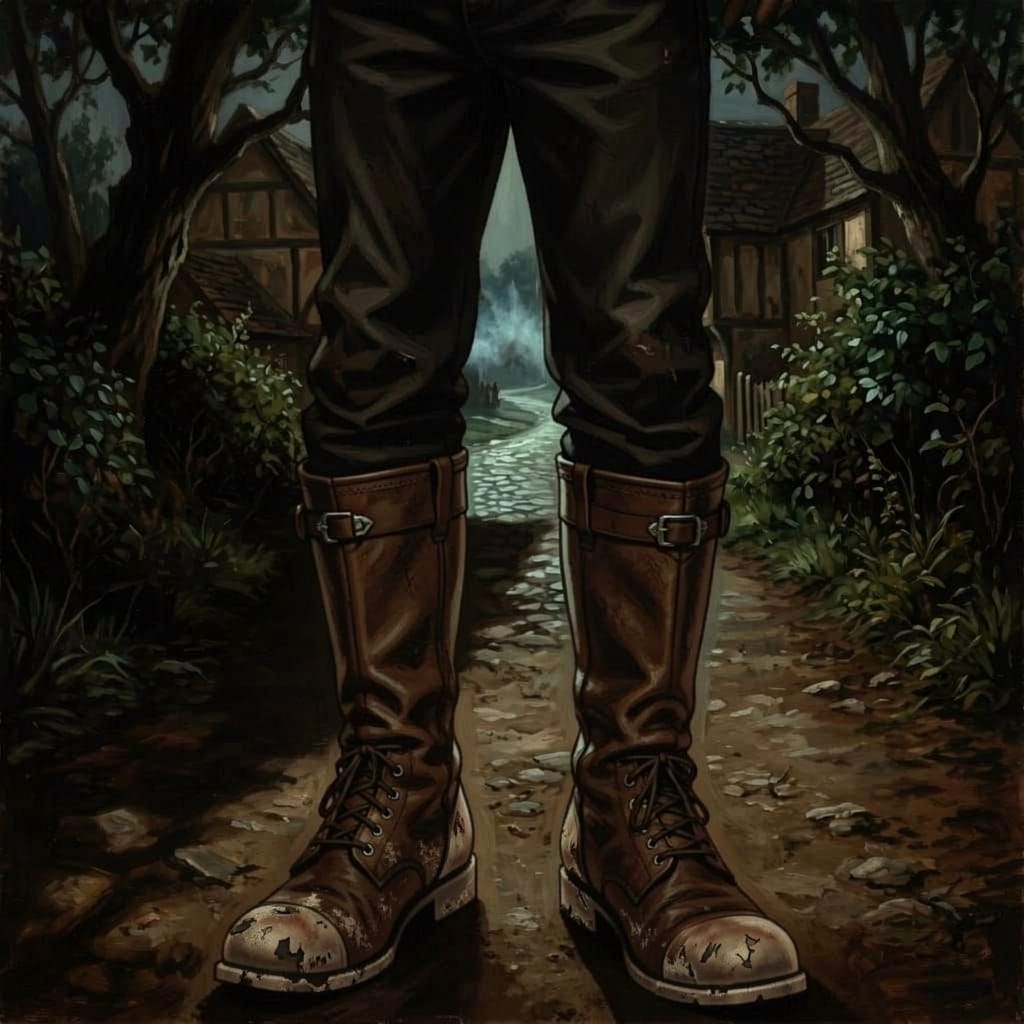
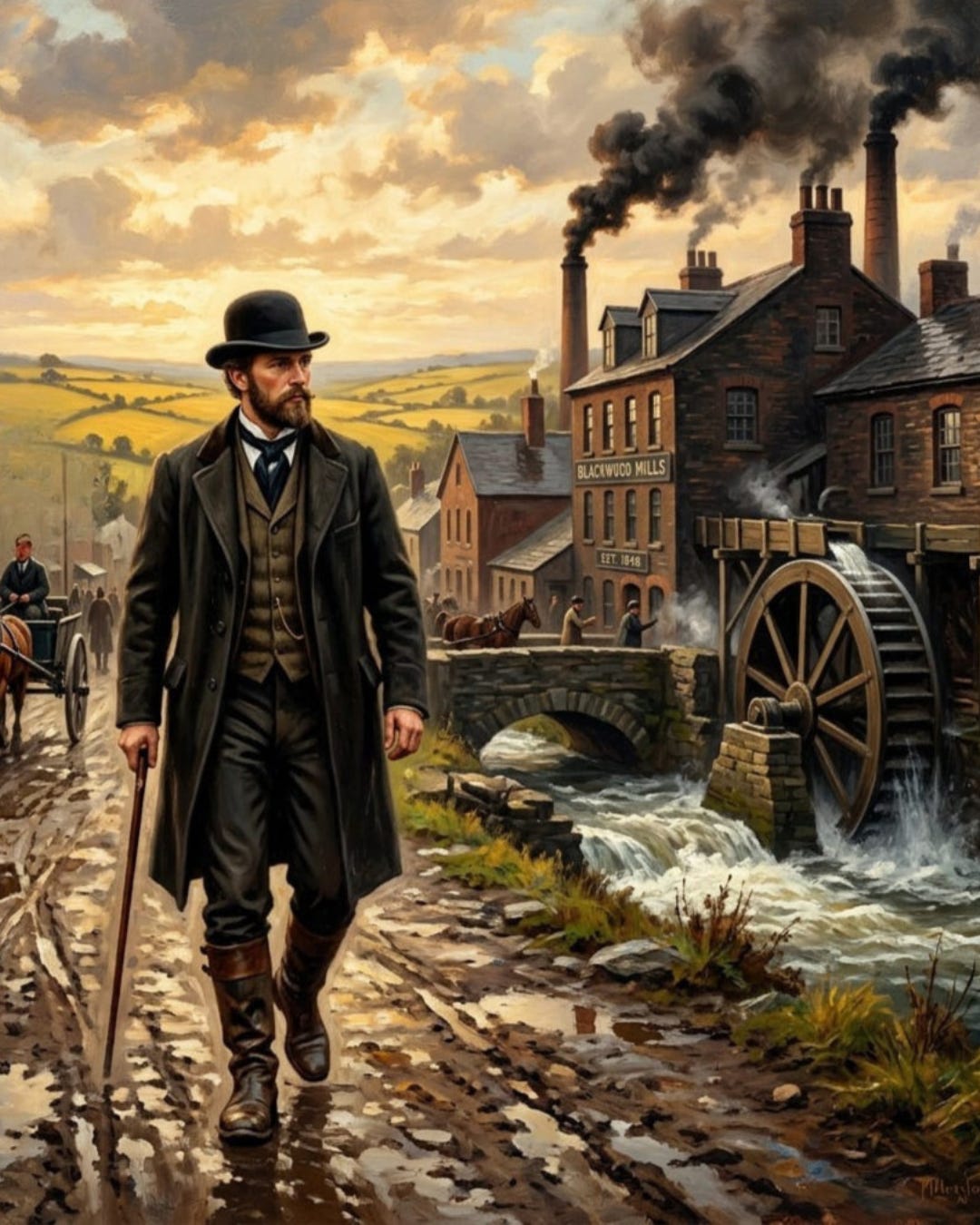
The thought did not occur to him. Choosing was for crossroads, and he was past the crossroad, had always been past it by the time morning found him and set him moving. The mill. The fields. The particular smell of turned earth and coal smoke that meant the day had properly begun. His coat was good wool, brushed clean at the collar. His shoes had given at the toe and heel both, worn to the shape of his going.
He walked as men walk when they are certain of their direction — not quickly, not slowly. Steadily. The path beneath him was packed so hard it shed rain like stone.
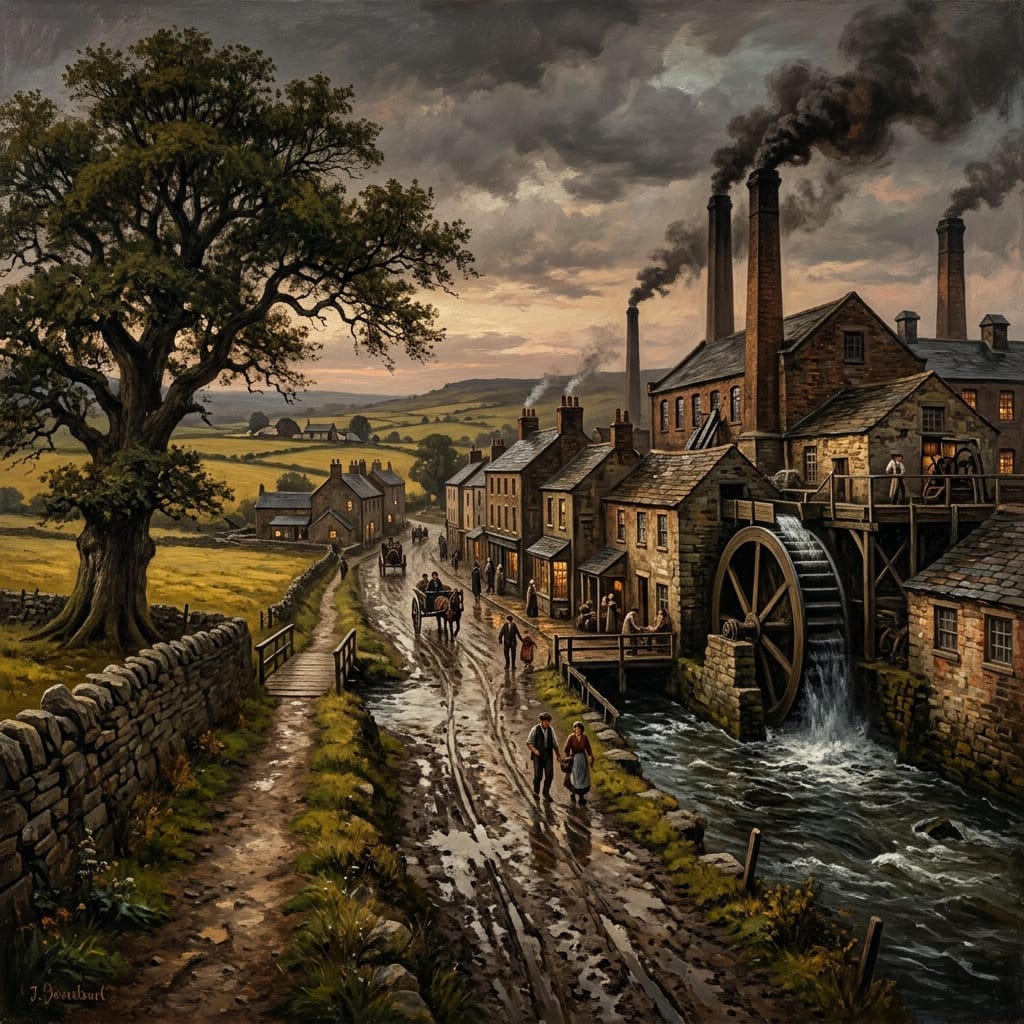
The other path ran alongside for a while before it angled away.
He knew it was there the way he knew the elm by the wall was there, the way he knew the sound the mill wheel made in the hour before dusk. Not as a thing he attended to. As a thing that was simply present while he attended to other things.
Another day, he had thought once. Then he had not thought it again, because thinking it again would have required noticing he hadn’t gone, and he was a man with a great deal to attend to.
When there is time, he had thought, at some point he could not precisely locate.
When I have earned it.
These were reasonable thoughts. They had the weight of reasonable thoughts, the solid feel of them, and he had set them down in himself the way a man sets down good tools — not discarded, only stored.
It was a particular evening in early May.
The air had a quality he could not name — not warmth exactly, not the loosening that came with warmth, but something underneath that. As though the ground itself had drawn a slow breath and not yet released it. His hands felt it. The back of his neck. The soles of his feet through the worn leather, reading something in the earth that his mind had not yet been consulted about.
He was walking as he always walked.
And then he was not.
He had not decided to stop. His foot simply did not continue.
The air was mild, May-soft, threaded with new growth from the fields beyond the wall.
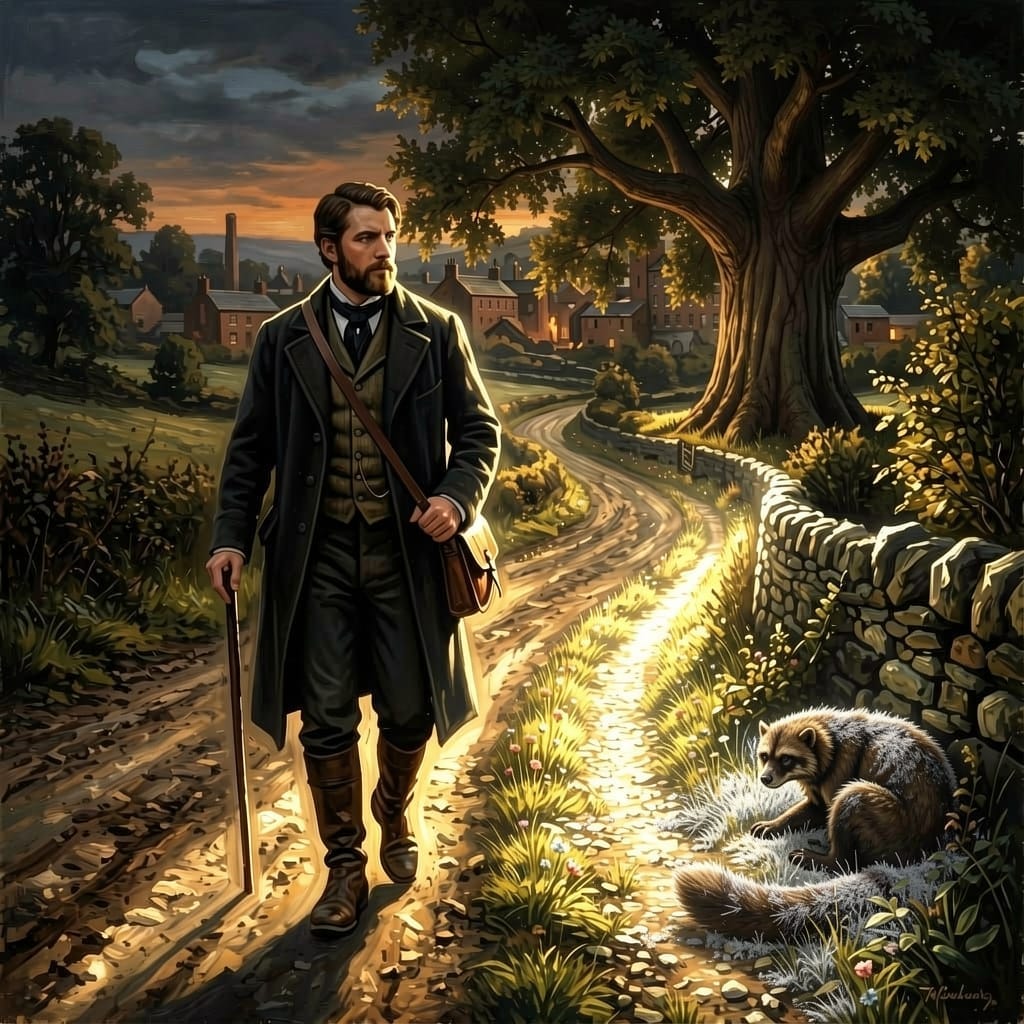
He had stopped because of the light. The moon had found an angle through the elder trees that did something unexpected: it fell across the other path, and not across his own. His path lay in the comparative quiet of shadow — packed and clear and going exactly where it went. The other path caught the light entire.
He saw it properly for the first time.
Not the idea of it. The thing itself.
Grass grew along its edges, not choking it but edging it softly, the way water edges stone. There was colour he hadn’t registered — something between green and silver where the moon touched it, a texture his shoes had never learned. Somewhere in the overgrowth a small sound moved, unhurried, belonging entirely to itself. The path curved slightly before it disappeared, which meant he had never seen where it opened.
His chest did a thing he had no word for.
And then, because he was still — because for once he was not moving — he became aware of other things.
The cold first. Not the cold of the air. This cold was underneath that, pressing in from the shadow of his own path, from the packed earth behind him and the darkness that gathered where the moonlight did not fall.
Underneath all of it — iron. Musk. Something older than the village, older than the mill, older than the word they used when they thought they were improving things.
Then a sound. Closer than the overgrowth, somewhere in the shadow of the familiar ground — a slow exhale. Not wind. Something that breathed.
At the edge of his vision, where the shadow deepened along the well-worn path, a pale remnant of frost still held against the base of the wall. And beside it, something low and still. A glimmer of fur, perhaps. He did not look directly.
His breathing went quieter. He had not decided to be quiet.
Whatever was there did not shift toward him or away. It occupied the shadow of the well-worn path with a patience so complete it had no edges — indifferent to his fear, indifferent to his courage, indifferent to the particular reasonableness of his life. It was not waiting for his acknowledgment. It was not asking for anything at all.
The sound in the overgrowth continued on the other side of him, unhurried.
The cold held where it was.
He stood between them.
After a time — he could not have said how long — he looked at his path. At what his going had made. The earth was pale and compacted, the edges sharp where the ground had simply given up trying to grow. It was efficient. It was clear. It was the path a man arrived at when he had somewhere to be, every day, without fail, and knew what being responsible looked like.
He had built this. Step by step, in the full and reasonable intention of also, one day, walking the other.
The moon did not move. The light held where it fell. The cold held where it was.
He understood, in the way a man understands something his body has known longer than his mind, that the ground did not record what he had meant to do.
It recorded where he had placed his weight.
Both paths were visible now. One lit. One dark, and occupied.
And for the first time, he was aware — fully, without the shelter of his own reasoning — that choosing either one would shape the ground again.
He did not move.
What is known cannot be made unknown. Only ignored.
Many pocket the knowing and keep walking.
Some will step off the worn path long enough to feel the difference.
— from the Spiral Vault