
Found in an acacia box in the cellar of the old cottage past the Lute and Lantern, in the early turning of the season. The box was not sought. I do not know what it means. I render it as I found it.— Isendra

Being the account of Aleth, The Unnamed Tender, written in the late fullness before the turning.
If you can read these marks, the world has kept something I was not certain it could keep.
I did not write this for my time. I wrote it for yours. I hope yours is not too late.
Before the first unraveling, the world received what was given to it.
This is the thing that is hardest to explain to those who have grown up after. Not because it is complicated. Because it is simple in the way that breathing is simple — unremarkable until it stops, and then the only thing.
Grief went somewhere. Loss went somewhere. The weight of a hard season, the consequence of a decision made in error, the particular heaviness of watching something you loved diminish — these moved through a person and into the ground and the ground held them the way the ground holds water, the way deep roots hold a hillside that would otherwise wash away in rain. The world was built to receive what we could not carry alone. We were not separate from it. We were part of what it used to carry itself.
I do not know how to prove this to you. I can only tell you that I remember what it felt like to set something down and have the earth take it. And I can tell you what I am watching begin, here, in what should be the fullness of late summer, in a season that looks like abundance but smells, if you are paying attention, like the first cold turning at the edge of things.
It began with a berry.
Not dramatically.
This is important — that it did not begin dramatically.
There was no declaration. No gathering of powers. No moment anyone would have thought to record, except me, and I am recording it now only because I have learned that the small turnings are the ones that matter, and by the time they matter everyone has forgotten where they turned.
There were two berry bushes. There are still two berry bushes. This is what makes it difficult to explain.
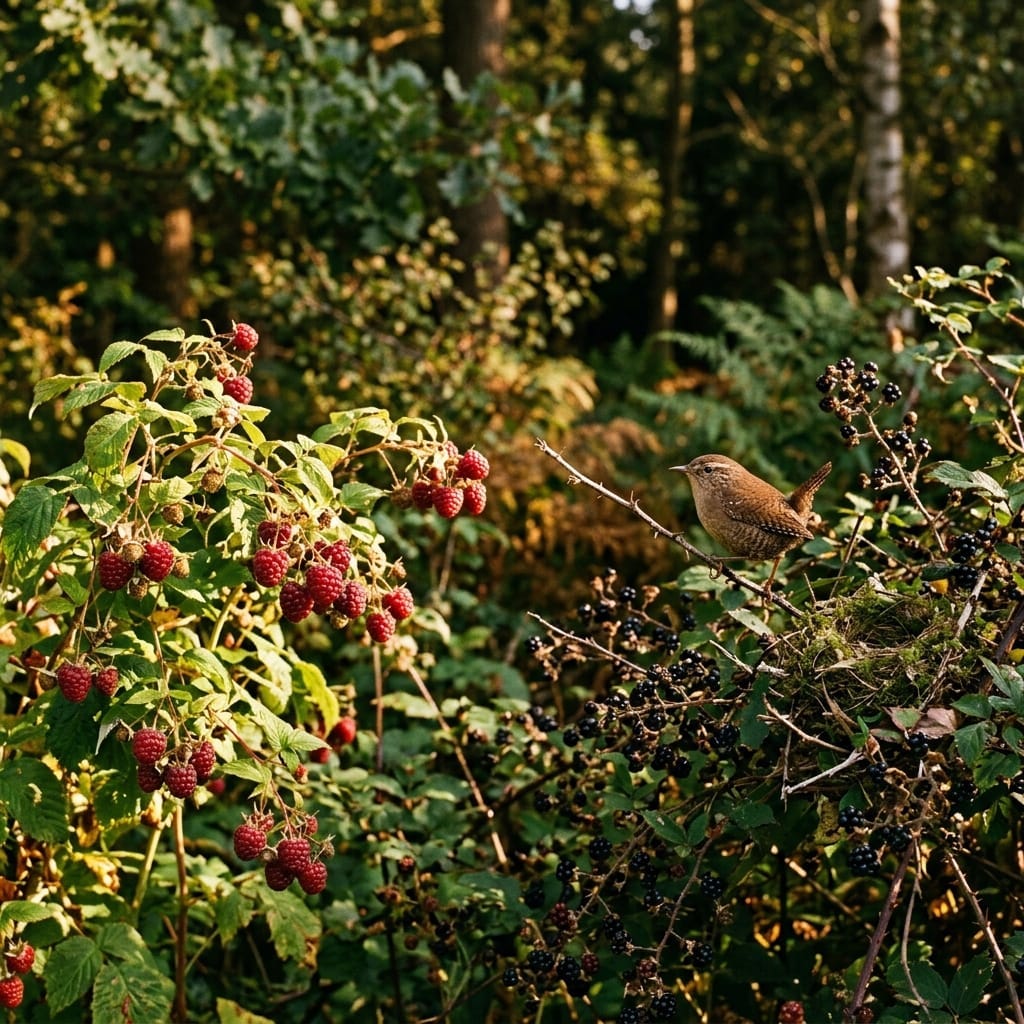
The first bush — the one that has always grown here, that the birds know, that the foxes visit in a particular week each autumn, that sends its seeds through them and winters in the cold and cracks open in the spring because of the cold and not despite it — this bush produces a fruit that is small and dark and slightly tart. Not unpleasant. Not poison. Not useless. Nourishing in ways that are not immediately apparent to the human tongue.
The second bush was tended. Selected for. Encouraged by human hands that understood what they preferred and worked patiently toward it. The fruit is larger. Sweeter. More immediately satisfying. It is, by every measure a person standing above the thing rather than inside it would use, the better berry.
And it is.
Except another person standing near the same grove, raised differently, hungry for different things might have looked at the same two bushes and chosen otherwise.
The standard was not absolute. It was brought.
I want to be precise about this. I am not arguing against sweetness. I am not saying the improved berry is a lie. It is genuinely better at being what we decided a berry should be.
I watched a man pull the first bush out last summer.
Not in anger. Not in ignorance. With the clean conscience of someone tidying. It was crowding, he said, the preferred variety. Taking light. Taking ground. He said: that one doesn’t produce much worth having.
I stood at the field’s edge and watched him work and felt something shift beneath the word worth that I do not think he felt. Something that had been attached to the world loosened, slightly, and moved.
The birds came back three days later looking for the bush. They came back the day after that. Then they found something else, somewhere else, and stopped coming.
I do not know yet what the something else was. I do not know what needed the birds to come here and not there instead. I do not know how far the chain runs or where it ends. This is precisely my point.
He does not know either.
He has the better berry. He is not wrong that it is better. He is standing above the system making a reasonable judgment and the system is rearranging itself below him in ways that will not be visible until the rearrangement is structural, and by then it will look like the natural order of things rather than the consequence of a morning’s tidying.
The word he used was worth.
I keep returning to it.
Worth having. As though the bush existed to produce something for us to have. As though the question a berry bush answers is: what does this give me? Rather than: what does this participate in?
This is the small twist. I want you to feel how small it is. I want you to feel how reasonable it sounds. I want you to feel how difficult it would be to object to it without sounding like someone who prefers the worse berry for incomprehensible reasons.
The word worth placed us outside the thing we were judging. It turned participation into assessment. And assessment, once it begins, does not stop at bushes.
The same logic moves to the insect that lives on the tart berry’s leaf. The same logic moves to the creature that eats the insect. The same logic moves, with the same clean conscience and the same reasonable face, until it reaches the human who does not produce much worth having. Who is taking light. Taking ground. Crowding the preferred variety.
I am not predicting cruelty. Cruelty announces itself and can be refused.
I am predicting tidiness. I am predicting the clean conscience of someone standing above the system making a reasonable judgment. I am predicting that the word they use will not be evil at first — it will be worth. And then efficiency. And then burden. And then, much later, when the chain has moved far enough that no one alive can see where it started, they will reach for a stronger word, and the stronger word will feel earned because by then they will have forgotten that they are the ones who pulled the first bush.
The world was built to receive what we could not carry alone.
What I am watching begin is the long unlearning of that. Preference does not need violence to do its work. It only needs time, and tidiness, and the accumulated weight of ten thousand reasonable judgments made by people standing above the whole, selecting what they want from it, tidying what remains.
The thing that receives what we cannot carry — I have felt it my whole life, in the ground, in the movement of seasons, in the quality of grief that moves through a community rather than being carried alone. I feel it thinner now than when I was young. Not gone. Not yet. Thinner.
Like a root system slowly losing the trees that feed it.
Like a river losing the tributaries that keep it wide enough to carry what the whole watershed sends down.
It still flows. It will flow for a long time. That is the danger — it will still flow, and the ones who pulled the first bush will point to the flowing river and say: see, no harm done. And they will be right, in that moment. And the moment after. And the moment after that.
Until they are not.
I do not know who will read this.
I have not said this aloud. Not from fear — I am old enough to be past fear of consequence — but because I know what happens to the warning that arrives before the hearer can feel what it is warning against. It gets a name. And once it has a name it can be set aside. I will not give them that convenience. I am putting it here instead, in the best wood I know, I wrote it in the old marks that I hope someone will still be able to read.
I am trusting that time is a better carrier of truth than argument ever was.
I put it somewhere that felt like it had learned to keep things — the kind of place that keeps what is given to it, not because anyone instructed it to, but because that is what it is.
If you are reading this, the world kept it long enough. Which means something in the world still knows how to hold what it is given.
Which means it is not too late. I do not know for what — that is yours to discover.
I am at the end of my seasons. This is the last useful thing I know how to do. I have planted what I could. I put this in good wood, and I am leaving it where things get kept.
I only know that the first bush is gone, and the birds are finding something else, and somewhere down the chain the something else is under a pressure it was not built for.
And I know the word that started it.
And I know that the word sounded reasonable.
— Aleth, The Unnamed Tender
In the last warmth, before the turning